
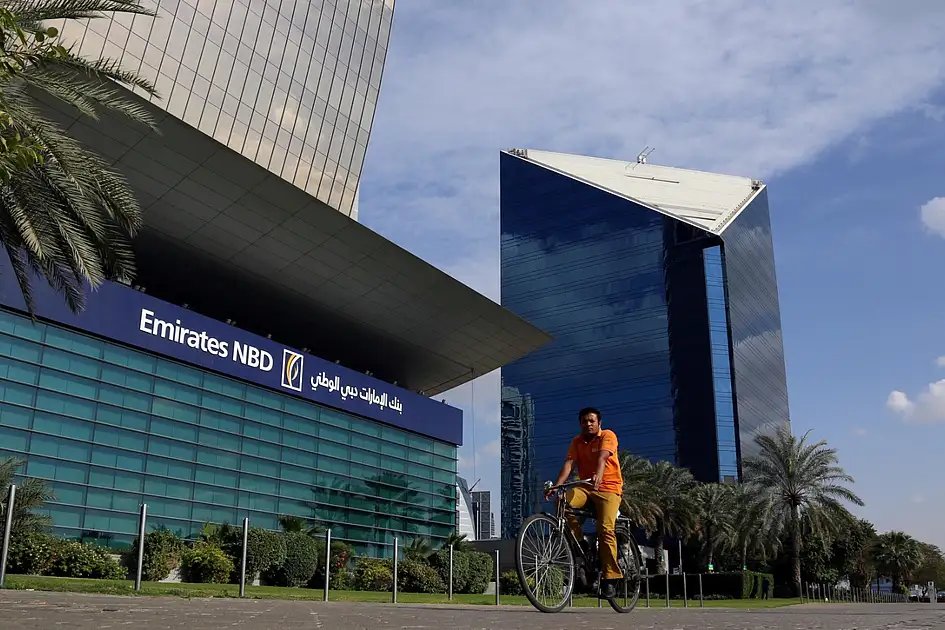
Dubai’s Emirates NBD has secured regulatory clearance from the Central Bank of the UAE (CBUAE) for its proposed majority acquisition of India’s RBL Bank, marking one of the most ambitious overseas expansion moves by a UAE lender and reinforcing a broader trend of Gulf banks scaling operations in India.
The approval clears the way for Emirates NBD’s planned investment of about $3 billion for a stake of up to 60 per cent in RBL Bank, subject to remaining regulatory approvals in India. The transaction — the largest foreign direct investment in India’s banking sector — will allow the Dubai lender to consolidate its existing branches in Mumbai, Chennai and Gurugram into a locally incorporated platform anchored by RBL Bank.
The move follows earlier in-principle approval from the Reserve Bank of India (RBI) to convert Emirates NBD’s India branches into a wholly owned subsidiary structure, enabling the bank to expand its domestic footprint on par with local lenders.
Analysts say the deal represents a structural shift in how Gulf lenders are approaching India — from representative offices and niche wholesale banking to full-scale operating platforms.
S&P Global Ratings noted recently that strong credit demand and improving liquidity conditions are supporting UAE banks’ international expansion strategies, adding that “strong credit growth… supported banks’ strong profitability” and their ability to pursue overseas opportunities.
Separately, Fitch Ratings described Emirates NBD’s acquisition of RBL Bank as “rating neutral”, signalling confidence that the expansion is manageable from a balance-sheet perspective while strengthening the bank’s long-term strategic positioning in India.
The India push by Emirates NBD comes alongside similar expansion moves by other UAE lenders seeking to capture rising trade, investment and capital flows between the two countries following the Comprehensive Economic Partnership Agreement (Cepa).
Mashreq Bank became the first UAE lender to secure approval to establish an International Financial Services Centre Banking Unit in Gujarat International Finance Tec-City (GIFT City), strengthening its ability to provide foreign-currency lending, treasury services and trade finance across the India–Middle East corridor.
First Abu Dhabi Bank (FAB), the UAE’s largest lender by assets, has also expanded operations in India through Mumbai and GIFT City platforms aimed at supporting cross-border corporate banking and investment connectivity between the two economies.
Together, these initiatives underline a coordinated shift by UAE banks to position themselves at the centre of what is emerging as one of the world’s fastest-growing financial corridors linking the Gulf, India and Europe.
India is already the UAE’s second-largest trading partner, with non-oil trade exceeding $60 billion annually and expected to accelerate further under Cepa. Banks are increasingly moving to capture opportunities in infrastructure finance, SME lending, treasury services and digital cross-border payments linked to this corridor.
For Emirates NBD in particular, the acquisition provides immediate scale in India’s fast-expanding retail and corporate credit markets while strengthening its role as a gateway bank for Indian businesses operating across the GCC.
The expansion also reflects strong capital deployment momentum across the UAE banking system. According to CBUAE data, investments by UAE banks rose 17.4 per cent year-on-year to Dh872.3 billion in January 2026, highlighting robust liquidity and balance-sheet capacity to support overseas growth. Debt-securities investments alone climbed 26 per cent annually to $114.1 billion.
Analysts say such moves are likely to accelerate as UAE lenders increasingly align their international strategies with trade flows rather than geography — positioning India as a core pillar of long-term regional banking expansion.
